




NASENI empowers 120 Kogi youths with N50,000 start-up support

NASENI empowers 120 Kogi youths with N50,000 start-up support
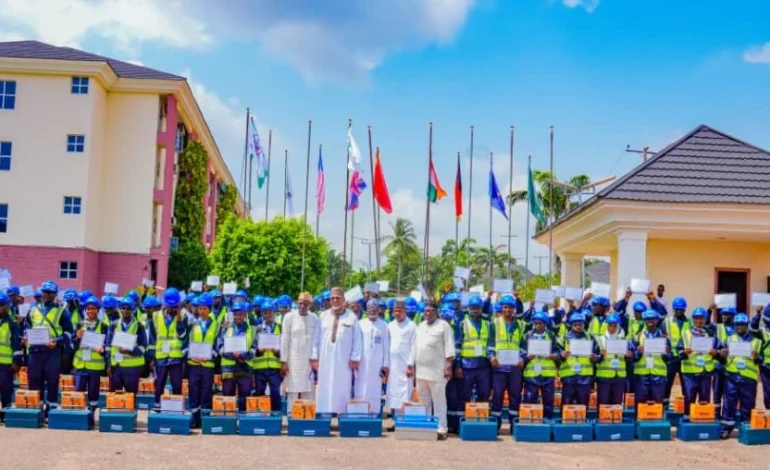
The Federal Government through the National Agency for Science and Engineering Infrastructure has trained 120 youths in Lokoja, Kogi State, in electrical installation and maintenance, providing each beneficiary with a starter pack and N50,000 to support the commencement of their businesses.
According to a statement by the Director of Press of the agency, Olusegun Ayeoyenikan on Saturday said the intervention was designed to equip young people with practical skills to tap into employment and business opportunities in Nigeria’s building and construction industry, where demand for electrical installation and maintenance services accompanies the development of homes, offices, factories and other infrastructure.
The Executive Vice Chairman of NASENI, Khalil Halilu, disclosed this through the Acting Coordinating Director of Finance and Accounts, Ibrahim Dauda, at the closing ceremony of the NASENI Skill Acquisition Training and Youth Empowerment Programme in Lokoja.
Halilu said the programme was part of the agency’s efforts to translate science, engineering and technological development into economic opportunities for Nigerians, particularly young people seeking sustainable livelihoods.
“At NASENI, our vision of industrialisation goes beyond factories and machines. Industrial development must ultimately create opportunities for ordinary Nigerians,” he said.
He explained that the Skill Acquisition Training and Youth Empowerment Programme was established to take practical skills, technologies and economic opportunities directly to communities across the country.
According to him, the training in modern methods of electrical installation and maintenance was intended to prepare the beneficiaries for the growing need for skilled personnel in the building and construction sector.
“New homes, offices, businesses, factories, farms, schools and public institutions are increasingly springing up, and they need your services,” Halilu said.
He added that the beneficiaries had received starter packs and N50,000 each to help them put their newly acquired skills into practice.
“With this training, we have not only impacted knowledge; we have also provided starter packs and cash token of N50,000 each designed to help them begin their journey immediately,” he said.
Halilu urged the trainees to use the equipment responsibly, practise diligently and maintain professional standards, stressing that their ability to turn the training into sustainable businesses and livelihoods would determine the programme’s impact.
He said the initiative aligned with the Federal Government’s efforts to expand economic opportunities, strengthen human capital and promote a more productive economy.
The NASENI chief also commended the Maigari of Lokoja, Ibrahim Gambo Kabir Maikarfi IV, traditional chiefs, religious leaders and political stakeholders in the area for supporting the programme.
In his keynote address, the Maigari praised NASENI for bringing the initiative to Lokoja, describing the training as an opportunity for young people to improve their professional competence and contribute to the economic development of the city.
He charged the beneficiaries to apply the knowledge acquired during the programme, adopt improved working methods and deliver quality services to customers.
The intervention comes amid efforts by government agencies to address youth unemployment through vocational training, entrepreneurship support and technical skills development.
Electrical installation and maintenance are among the practical trades that can provide pathways to self-employment, particularly where trainees can combine technical competence with access to tools, start-up capital and opportunities to secure contracts.
However, the long-term impact of such programmes will depend not only on the number of people trained but also on whether beneficiaries can establish viable businesses, secure customers and sustain their operations after the initial support ends.
All rights reserved. This material, and other digital content on this website, may not be reproduced, published, broadcast, rewritten or redistributed in whole or in part without prior express written permission from PUNCH.
Contact: [email protected]
Stay informed and ahead of the curve! Follow The Punch Newspaper on WhatsApp for real-time updates, breaking news, and exclusive content. Don’t miss a headline – join now!
Stay in the know—fast. Get instant alerts, breaking headlines, and exclusive stories with the Punch News App. Download now and never miss a beat.
Source: Punch Newspapers – Latest News