


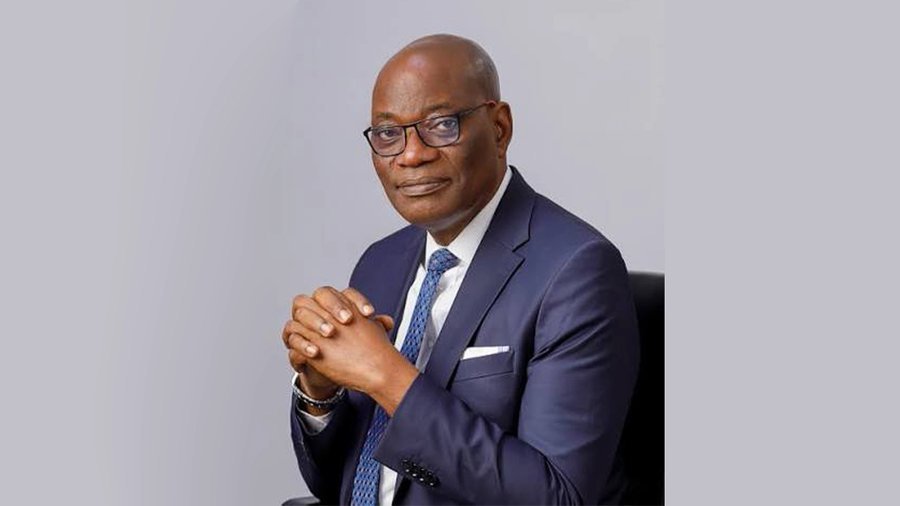
The chairman of the Governing Board of the National Universities Commission (NUC), Oluwatoyin Ogundipe, a professor of botany, has identified education as a critical instrument for breaking the cycle of poverty and inequality in African suburban communities.
Mr Ogundipe who was former vice chancellor of the University of Lagos, argued that strategic investment in education, particularly at the foundational, technical, vocational and tertiary levels, is essential to improving livelihoods, expanding economic opportunities and promoting sustainable development across the continent.
He made this submission while delivering the 50th Memorial Anniversary Lecture in memory of Tijani Isiaka, a prince and former Executive Director of the Western Nigeria Development Corporation, on Tuesday, 1 November 2026.
The lecture, titled ‘Education as a Tool to Fight Poverty: The Case of African Suburban Communities’, examined how poverty, inadequate educational infrastructure, economic inequality and limited access to quality learning continue to undermine the development prospects of millions of people across Africa.
Related Posts:
- ‘Accumulation is not development’ – Odukoya urges Africa to build productive capacity
- FULL TEXT: Dapo Olorunyomi’s lecture at Ajayi Crowther University on Nigerian journalism
- Unsafe, Unprotected: Oyo schoolgirls suffer in silence over lack of menstrual facilities
- Between School and Survival: Why many girls in Oyo State are still missing class
The professor highlighted the scale of the education crisis in sub-Saharan Africa, noting that 52.5 million girls of primary and secondary school age are out of school in the region. He also drew attention to the learning crisis, stating that nearly nine in 10 children in sub-Saharan Africa cannot read and comprehend a simple text by age 10.
According to him, seven out of 10 children do not have access to pre-primary education, about one-third drop out of primary school, while nearly 60 per cent of adolescents from the poorest households are out of school. He identified economic inequality, inadequate infrastructure, gender discrimination, conflict and political instability as major factors perpetuating the crisis.
Mr Ogundipe further stressed that the consequences of educational exclusion extend beyond the classroom, reinforcing intergenerational poverty and limiting individuals’ ability to participate meaningfully in economic activities. He explained that children from low-income households are often disadvantaged by their families’ inability to provide essential learning resources, including books, educational materials and access to information.
He also emphasised the importance of girls’ education, noting that educated girls are more likely to earn higher incomes, reinvest in their families, resist gender-based violence and contribute to positive changes in their communities.
Highlighting the funding disparities between African and high-income countries, Mr Ogundipe noted that in 2021, 29 low-income countries, most of them in Africa, spent an average of just $54 per student, compared with approximately $8,500 in high-income countries. He warned that the region risks missing a significant development opportunity if it fails to equip its growing young population with relevant knowledge and skills, noting that strategic investment in education could contribute between 11 and 15 per cent to gross domestic product (GDP) by 2030 and lift 40 to 60 million people out of poverty.
To address these challenges, the former UNILAG Vice Chancellor called for increased and more efficient investment in educational infrastructure, teacher training, girls’ education and community engagement. He also advocated expanding Technical and Vocational Education and Training (TVET) programmes, investing in digital infrastructure, strengthening school feeding programmes, providing conditional cash transfers and subsidising learning materials to reduce the financial barriers keeping children out of school.
Full Lecture below
Education as a Tool to Fight Poverty:
The Case of African Suburban Communities
Lecture Delivered
by
Prof Oluwatoyin Temitayo Ogundipe FRSB, FBSN, FLS, FAAS, FAS
Chairman, Governing Board, National Universities Commission
Former Vice Chancellor, University of Lagos, Nigeria (2017-2022).
at the
50th Memorial Anniversary Lecture in Memory of
Prince Tijani Adebowale Isiaka
Tuesday, 1st November, 2026
Protocol
Introduction
It is a singular honour and privilege to deliver this Lecture in memory of Prince Tijani Adebowale Isiaka, a former Executive Director in Western Nigeria Development Corporation (Now, Odu’s Investment Company Limited).
The theme before us, “Education as a Tool to Fight Poverty: The Case of African Suburban Communities”. Education, is one of the most powerful tools for reducing poverty and inequality in African suburban and peri-urban communities. As African cities experience rapid, unprecedented expansion, suburban communities—often serving as transitional zones between rural landscapes and urban centers—face unique socio-economic challenges.
Implementing targeted educational interventions in these areas creates a reliable pathway to sustainable economic development. Suburban and peri-urban areas in Africa frequently absorb rural migrants seeking better economic opportunities.
However, these communities often outpace municipal planning, leading to distinct structural vulnerabilities: A lack of formal employment drives a high concentration of residents into low-wage, insecure informal economies.
Rapid population growth regularly outstrips the construction of public schools, clean water systems, and reliable electricity. Without specialized skills or formal qualifications, youth in these communities face a high risk of intergenerational poverty.
In many corners of Africa, the story is familiar: young children rising before dawn, walking long distances to crowded classrooms, often with empty stomachs but hopeful hearts. Their determination is not just admirable but its ground-breaking. Because in the face of poverty, education remains Africa’s most powerful and hopeful weapon for transformation. Education is more than a classroom experience but a catalyst for breaking generational poverty, empowering communities, and driving sustainable development across the continent. It`s the one investment that guarantees long-term change.
However, poverty is a significant problem that needs to be solved to improve living standards in our respective countries. The stagnation of poverty should be unacceptable and eradicated (Agboola & Balcilar, 2012). Households with average incomes lower than the poverty line were identified as persistently poor (Limanlı, 2015). Material deficiencies are a significant source of poverty and economic inefficiency. People living in conditions of material deprivation
cannot develop the abilities and skills that make them productive human resources (Bodea & Herman, 2014). Poverty is when a person cannot sustain themselves according to the group’s standard of living and cannot take advantage of a group (Wekke & Cahaya, 2015).
Poverty means that people have limited access to education to increase their productivity. Poverty occurs when people cannot meet the minimum requirements for a decent life (Daher & Haz, 2011). Families living in poverty have limited access to material resources (cost of living, food costs, stimulating toys, and books) and limited access to immaterial resources (e.g., education, access to information, and developing one’s experience and skills).
Low-income families cannot invest enough human capital into their children (Banovcinova et al., 2014). Because education directly impacts a person’s productivity, it is one of the most critical factors in breaking the cycle of intergenerational poverty (Mihai et al., 2015). Impoverishment due to a lack of education will make children born into poverty fall into a cycle of poverty that cannot be avoided. Most children born into poverty have a low chance of educational success. Because of lack of education, their chances of adult success are so low that they experience social exclusion (Sy, 2013).
Hence, Education in Africa: A Life-threatening Poverty and Education Disaster Sub-Saharan Africa, a region rich in cultural diversity and natural resources, has been contending with the intertwined challenges of extreme poverty and an education crisis. Due to extreme poverty, access to quality education remains elusive for many children. While 52.5 million girls of primary and secondary school age are not attending school in Sub-Saharan Africa.
There are four key factors contributing to extreme poverty and the education crisis. Understanding the causes will pave the way for empowering individuals. And education is the key. Education must be prioritized as a fundamental right and a powerful tool to break the cycle of poverty and drive sustainable development. However, What are the factors Contributing to Extreme Poverty and Education Crisis?
- Economic Inequality
One of the primary drivers of extreme poverty is the unequal distribution of wealth and resources within Sub-Urban communities. The region’s economic disparities have left marginalized communities without access to basic necessities, including quality education.
- Lack of Infrastructure
Insufficient infrastructure, such as schools, classrooms, and sanitation facilities, poses a significant barrier to education. Many remote areas lack proper infrastructure, making it challenging for children to attend school regularly and hindering the quality of education provided.
- Gender Inequality
Gender discrimination persists in Sub-Urban communities, limiting educational opportunities for girls. Deep-rooted cultural norms, early marriages, and gender-based violence perpetuate a cycle of poverty and deny girls their right to education.
- Conflict and Instability
Prolonged conflicts and political instability disrupt educational systems, displacing communities and denying children the chance to attend school. The destructive consequences of these conflicts further exacerbate poverty and hinder socio-economic development. Then, what are the way out?
Empowering through Education
Education serves as a catalyst for change and empowerment, enabling individuals to break free from the vicious cycle of poverty. Education equips individuals with knowledge, critical thinking skills, and entrepreneurial capabilities, empowering them to pursue better livelihoods and contribute to their communities. A girl in school is likely to earn up to 25% more per year after the completion of secondary education, reinvest 90% of her earnings in her family, reinvest in her children’s education, resist gender violence, and become a force for change in her community.
“Education is the most powerful weapon which you can use to change the world,” Nelson Mandela said. We agree, especially when that change is towards a world free of extreme poverty. Across the globe, people with more education are less likely to be in poverty. One-fifth of people aged 15or older without formal education live in extreme poverty, compared to just 3% of those with higher education.
Increasing tertiary education levels can reduce poverty in the long term. At the current global economic level, completing tertiary education could make the difference between living in poverty and being established in a future economy. Most families living in conditions of extreme poverty will not be able to send their children to school. Lack of education will result in poverty and limit access to education (Mihai et al., 2015). Increasing education and access to learning for low-skilled communities will reduce medium-and long-term poverty (Misir, 2011).
According to (Pratysto, 2025), tertiary education has been proven to bring positive externalities to the economy and social welfare. It is believed that higher education can help reduce poverty by sharing knowledge and research between communities. One of the dominant factors that influences
poverty is education (Rahayu et al., 2021). High levels of education in the workforce are an important factor in contributing to economic growth (Shapiro & Tambashe, 2001), (Mankiw et al., 1992).
Empirical findings confirmed the existence of a relationship between education level and income (Caselli, 2005) (Cazzavillan et al., 2013) (Hall & Jones, 1999). So economic growth has been proven to have a role in reducing poverty (Sipahutar, 2016) (Sumargo & Haida, 2020). {Pratysto, 2025}.
Education is in crisis in Sub-Urban Communities: seven (7) out of 10 children do not get pre-primary education, and almost 9 in 10 children in Sub-Saharan Africa are unable to read and comprehend a simple text by age 10, compared to an average of 7 in 10 in other low- and middle-income countries. About one-third of children drop out of primary school due to economic pressures, early marriage, and poor school facilities. Nearly 60% of the poorest adolescents are out of school.
Today, schools still often lack essential resources like textbooks, teaching materials, and technology, or do not use them effectively. Despite recent increases in education spending, current spending levels are not enough to meet national and global education goals: in 2021, 29 low-income countries (most of them in Africa) spent an average of only $54 per student, whereas high-income countries spent around $8,500 per student. By age 18, a girl growing up today in Sub-Saharan Africa will have attended school for 8 years, compared to 13 years in a high-income country. Over that time, the government in Sub-Saharan Africa will have spent about $1,900 on educating her, and almost all that money will be spent on salaries. In contrast, a government in a high-income country will have spent about $117,000, or 60 times as much, with a significant proportion spent on learning resources to support teachers and learners in addition to paying teachers.
Looking ahead, with working-age population expected to double by 2050, the region has a unique window of opportunity to transform education outcomes, boost the skills of the workforce, add 11-15% to GDP by 2030, and lift 40 to 60 million people out of poverty. Providing technical, vocational and tertiary level skills for youth to adopt new technologies and infuse them into the regional economy is equally urgent.
By investing in education, Sub-Urban Communities can unlock its potential for economic growth and development. Microfinancing Partners in Africa’s Scholarship Program empowers educators to identify and give scholarships to students who are struggling in extreme poverty, assign them mentors, include microfinancing as a part of the curriculum, and guide the students through pay-it-forward activities. Henceforth,
- Investment in Infrastructure
Governments and international organizations must prioritize investment in educational infrastructure. This includes building and renovating schools, providing safe transportation, and ensuring access to clean water and sanitation facilities. Public-private partnerships can play a crucial role in funding and implementing these initiatives.
- Teacher Training and Support
Enhancing the quality of education requires investing in teacher training programs to equip educators with the necessary skills and knowledge.
Moreover, teachers should be provided with ongoing support, mentoring, and professional development opportunities to improve teaching practices.
- Girls’ Education
A concerted effort is needed to address gender disparities in education. This involves implementing policies that promote gender equality, advocating for girls’ rights to education, and providing scholarships and incentives to encourage female enrolment and retention in schools.
- Community Engagement
Collaboration between communities, schools, and parents is essential in overcoming barriers to education. Community engagement programs can raise awareness about the importance of education, combat cultural norms that limit girls’ access to schooling, and encourage parents to prioritize their children’s education. Furthermore,
Education is Non-Negotiable in the Fight Against Poverty in African Sub urban Communities
- It Unlocks Economic Opportunities
Quality education equips individuals with the skills they need to find jobs, start businesses, and earn stable incomes. It reduces reliance on aid and builds self-sufficient families. In fact, research shows that one additional year of schooling can increase earnings by up to 10%, proving that education is directly linked to economic growth.
- It Empowers the Marginalized– Especially Girls
Educated girls are less likely to marry early, more likely to raise healthy families, and far more likely to contribute economically. Education gives women a voice in their communities and a seat at the table in leadership, ensuring a more inclusive and balanced society.
- It Develops Problem-Solvers and Innovators
From agriculture to technology, health to governance – every sector benefit from educated citizens. Schools don’t just teach facts; they develop critical thinking, communication, and innovation. These are the tools Africa needs to overcome its challenges and shape a better future.
- It Strengthens Entire Communities
An educated person is more likely to be involved in civic life, demand accountability from leaders, and help others in their community rise. Education has a ripple effect. It improves health outcomes, reduces crime, and increases social cohesion.
What should be the Tactical Solutions for Sustainable Impact?
To maximize education as a tool against poverty, governments, NGOs, and private stakeholders should focus on three critical pillars:
- Expand Practical TVET Programs:Shift funding toward Technical and Vocational Education and Training tailored to local economic demands, such as construction, digital services, sustainable agriculture, and mechanical engineering.
- Invest in Digital Infrastructure:Equip suburban schools’ communities with solar-powered computer labs and reliable internet access to ensure students are not left behind in the global digital economy.
- Implement Social Safety Nets:Expand school feeding programs,conditional cash transfers, and subsidized learning materials to remove the immediate financial barriers that force children out of the classroom.
- Africa is home to the world’s youngest population. Imagine what could happen if every one of them had access to education. The ripple effect would be undeniable: fewer children on the streets, more women in boardrooms, stronger economies, and resilient nations.
- Every book opened, every class attended, and every diploma earned moves us one step closer to ending poverty not just for one person,but for communities and nations.
- You can be a part of this impact. Whether by donating, volunteering,or your support will helps take education further into the lives of children who need it most.
Conclusion/Recommendations
The way to fight poverty in Africa, is to analyse the effect of university education on poverty. This is to invest massively in university education to hope for the economic and social development. Indeed, the university education of individuals in a country is a critical factor in poverty reduction.
However, in sub-urban communities, there needs to be more space for university education, focusing rather on primary education policies. Poverty and social inequality can be overcome by providing everyone with access to quality education without exception and empowering them through
Education and training to acquire skills. Government policies and public awareness of the importance of Education have an impact on reducing poverty and social inequality.
Focusing efforts and investments on transforming Sub-Urban Communities education systems around three key areas:
- Investing in foundational learning, starting with universalizing early childhood education, and proficiency in literacy and numeracy, and keeping vulnerable populations – in particular adolescent girls – in school.
- Ensuring that skills development programs offer a wide variety of programs, are relevant and meet local economic needs.
- Supporting the transition of youth from education to gainful employment.This requires governments and development partners to spend more, but even more urgently to spend more efficiently. The window of opportunity to turn Africa’s growing working-age population into a powerful economic asset will not be open forever. Now is the time to invest smartly and get to work.
Together, let us join hands to ensure that every child in Sub-Urban Communities has access to a quality education, enabling them to fulfill their potential and shape a brighter future for the region.
- Let’s Work Together to transform Suburban communities
- Education is hope. Education is freedom. Education is the future.
- Let’s build that future- together.
Thank you
References
Agboola, M. O., & Balcilar, M. (2012). Impact of food security on urban poverty: a case study of Lagos State, Nigeria. Procedia-Social and Behavioral Sciences, 62, 1225–1229.
Banovcinova, A., Levicka, J., & Veres, M. (2014). The impact of poverty on the family system functioning. Procedia-Social and Behavioral Sciences, 132, 148–153.
Bodea, G., & Herman, E. (2014). A World of Poverty? Procedia Economics and Finance, 15, 643–653.
Caselli, F. (2005). Accounting for cross-country income differences. Handbook of Economic Growth, 1, 679–741.
Cazzavillan, G., Donadelli, M., & Persha, L. (2013). Economic growth and poverty traps in sub-Saharan Africa: The role of education and TFP shocks. Research in Economics, 67(3), 226–242.
Dabalen, & Styvanley D. (2024). To reduce poverty in Africa the focus must be on education and skills. Retrieved 3rd October, 2026. https://blogs.worldbank.org/en/africacan/to-reduce-poverty-in-africa-the- focus-must-be-on-education-and-skills-afe-1124.
Daher, M., & Haz, A. M. (2011). Changing meanings through art: A systematization of a psychosocial intervention with Chilean women in urban poverty situation. American Journal of Community Psychology, 47(3-4), 322–334.
Hall, R. E., & Jones, C. I. (1999). Why do some countries produce so much more output per worker than others? The Quarterly Journal of Economics, 114(1), 83–116.
Ibara M. B. (2025). University education: the way to fight poverty in Africa. Retrieved 3rd October, 2026. https://doi.org/10.12688/f1000research.158375.1
Limanlı, Ö. (2015). Intertemporal poverty in Turkey. Procedia Economics and Finance, 30, 487–497
Mahbubur, R. (2024). The role of education in reducing poverty and social inequality. International Journal of Science and Research. Retrieved 3rd October, 2026.
https://www.researchgate.net/publication/384359804_The_Role_of_Education_in_Reducing_Poverty_and_Social_Inequality
Mankiw, N. G., Romer, D., & Weil, D. N. (1992). A contribution to the empirics of economic growth. The Quarterly Journal of Economics, 107(2), 407–437.
Mihai, M., Ţiţan, E., & Manea, D. (2015). Education and poverty. Procedia Economics and Finance, 32, 855–860.
Misir, T. L. (2011). Regional initiatives to combat poverty and social exclusion-a case study of the European Union. EU Centre Background Brief Issue 3, April 2011.
Pratyso, T. (2025). Education as the key to escaping poverty in middle-income countries. JSRET (Journal of Scientific, Research, Education, and Technology) Volume4 Number, 2025. Retrieved 3rd October, 2026.
https://doi.org/10.58526/jsret.v4i2.760 Vol. 4 No. 2 (2025): Vol. 4 No. 2 2025.
Rahayu, H. C., Purwantoro, P., & Setyowati, E. (2021). Measuring the Effect of Inequality and Human Resource Indicators to Poverty Density in Indonesia. Jurnal Ekonomi Pembangunan: Kajian Masalah Ekonomi Dan Pembangunan, 22(2), 153–160.
Shapiro, D., & Tambashe, B. O. (2001). Gender, poverty, family structure, and investments in children’s education in Kinshasa, Congo. Economics of Education Review, 20(4), 359–375.
Sipahutar, M. A. (2016). Effects of credit on economic growth, unemployment and poverty. Jurnal Ekonomi Pembangunan: Kajian Masalah Ekonomi Dan Pembangunan, 17(1), 37–49.
Sumargo, B., & Haida, R. N. (2020). Linkages between economic growth, poverty and environmental quality in Indonesia. Jurnal Ekonomi Pembangunan: Kajian Masalah Ekonomi Dan Pembangunan, 21(1), 47–59.
Sy, I. (2013). The subjective approach as a tool for understanding poverty: The case of Senegal. Procedia Economics and Finance, 5, 336–345.
Wekke, I. S., & Cahaya, A. (2015). Fishermen Poverty and survival strategy: Research on poor households in bone Indonesia. Procedia Economics and Finance, 26, 7–11.
Source: Development Reporting


