






NGX Seeks Capital Gains Tax Review To Retain Foreign Investors
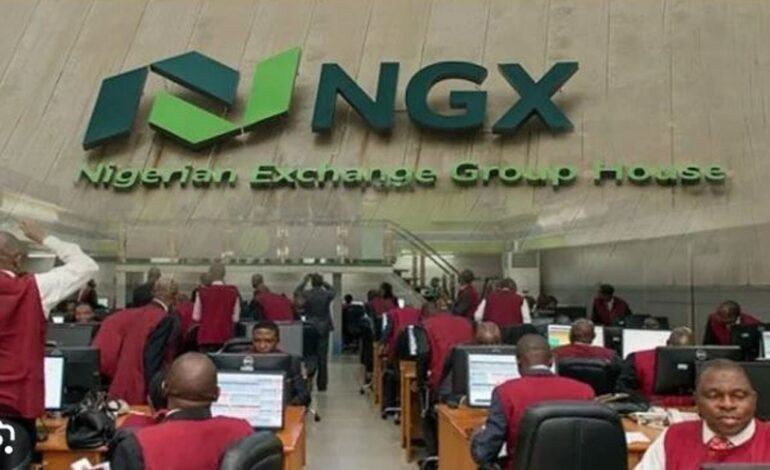

The Nigerian Exchange Group (NGX Group) has called on the Federal Government to review aspects of the new Capital Gains Tax (CGT) regime affecting foreign investors, warning that the tax could weaken Nigeria’s attractiveness as a destination for international capital if not carefully structured.
Group Managing Director and Chief Executive Officer of NGX Group, Temi Popoola, made the call while presenting the Exchange’s wish list to President Bola Ahmed Tinubu, stressing that the request was not for the abolition of Capital Gains Tax but for a review aimed at improving Nigeria’s competitiveness and retaining foreign investors.
Popoola said the Exchange supports the Federal Government’s efforts to increase tax revenues, noting that Nigeria’s tax-to-GDP ratio remains low and that taxation is an important instrument for improving government revenue.
However, he argued that the implementation of CGT should take into consideration the behaviour and investment decisions of international investors, particularly as Nigerian companies increasingly explore foreign markets for listings and access to capital.
According to him, foreign investors could increasingly gain exposure to Nigerian companies through overseas markets such as London, where the tax treatment of capital gains differs from Nigeria’s regime.
He warned that failure to address the issue could result in a situation where the Nigerian capital market becomes increasingly dominated by domestic investors while international investors move their capital and investment activities to foreign exchanges.
“One of the things we are seeing now is that these investors are going to London. Nigerian corporates are also going to London to list, and foreign investors are getting exposure to them there, where there is no Capital Gains Tax in the same manner,” Popoola said.
“If we are not careful, Nigeria could end up having a local listing market that is predominantly for local investors, while foreign investors move away.”
The NGX chief executive therefore urged the Federal Government to consider a more investment-friendly approach to CGT, particularly in respect of foreign portfolio and institutional investors whose investment decisions are influenced by the overall cost of participating in a market.
He said the objective should be to strike a balance between the government’s need to generate additional revenue and the need to maintain Nigeria’s competitiveness in attracting international capital.
“We are not asking for Capital Gains Tax to be abolished. We are simply asking for another look at the policy and for ways to optimise it, Mr President,” he said.
Popoola’s position comes as the Federal Government continues to implement broad-based tax reforms designed to strengthen domestic revenue mobilisation, widen the tax base and improve the efficiency of the country’s tax system.
For the Nigerian capital market, the treatment of capital gains is particularly important because the market relies on both domestic and foreign investors to provide liquidity, deepen price discovery and support efficient capital formation.
Foreign portfolio investors have historically played an important role in the Nigerian equities market, although their participation has been affected over the years by exchange-rate volatility, repatriation concerns, macroeconomic uncertainty and regulatory changes.
Popoola said policymakers therefore needed to ensure that tax reforms did not unintentionally create incentives for Nigerian companies or international investors to favour foreign exchanges over the domestic market.
Beyond taxation, Popoola also urged the Federal Government to intensify its privatisation and listing programme as part of efforts to deepen the Nigerian capital market and expand the number of large companies available to investors.
He noted that the development of Nigeria’s capital market had historically benefited from deliberate government policies that encouraged companies to list on the Exchange.
He cited the Indigenisation Programme of the 1970s as an example, arguing that the policy contributed to the emergence of major companies such as Nestlé and Unilever on the Nigerian capital market.
He also cited MTN Nigeria as a more recent example of a major corporate listing that significantly expanded the size and depth of the domestic equities market.
According to him, the government can replicate such outcomes by encouraging the listing of major privately held companies and government-owned assets.
“There are a few companies that we have identified, companies like LMC Petrochemicals, Indorama and NLNG,” Popoola said.
He noted that some of these companies already have provisions or structures that could facilitate eventual listings, while government could also consider listing some of its interests in strategic companies and assets.
“In other cases, it is simply within the hands of government to say, ‘Look, NLNG, let us list our stake on the Exchange,’ or perhaps Indorama or other assets that the NNPC owns in its portfolio,” he said.
The NGX GMD argued that government-backed listings could significantly increase the depth of the Nigerian capital market, provide investors with access to high-quality companies and create opportunities for Nigerians to participate in the ownership of major national assets.
He said stronger government support for privatisation and listings, combined with a competitive tax regime, would help position the Nigerian Exchange as a more attractive destination for both domestic and international investors.
The call for a review of CGT therefore forms part of a broader push by the NGX to ensure that fiscal and regulatory policies support, rather than undermine, the development of Nigeria’s capital market.
For Popoola, the priority is not to weaken government’s revenue drive but to ensure that taxation is designed in a manner that preserves Nigeria’s ability to attract capital.
“We are all for taxes,” he said, adding that the government should nevertheless consider “ways to optimise” the Capital Gains Tax regime so that Nigeria can continue to attract and retain foreign investors.
The NGX Group’s proposals underline the growing importance of tax policy to the competitiveness of Nigeria’s capital market, particularly at a time when companies and investors have more options for raising and deploying capital across international financial centres.