




Patients suffer as equipment shortage cripples Aro psychiatric hospital
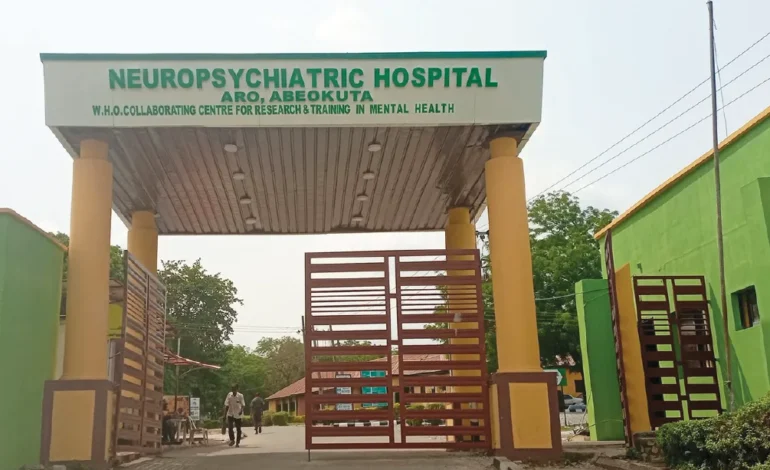

Patients suffer as equipment shortage cripples Aro psychiatric hospital
From wards forced to share blood pressure monitors to shortages of life-saving equipment, essential drugs, water and electricity, conditions at the Federal Neuro-Psychiatric Hospital, Aro, Abeokuta, Ogun State, are raising serious concerns about patient care and the hospital’s ability to deliver quality tertiary healthcare. Health workers say persistent shortages, inadequate staffing and poor funding are undermining their efforts to provide quality care, leaving patients to bear the brunt of the facility’s deteriorating conditions. JANET OGUNDEPO and TAIWO BANKOLE report
On October 16, 2026, a football game at the Federal Neuropsychiatric Hospital, Aro, Abeokuta, Ogun State, took a tragic turn when a student nurse, Godwin Taiwo, developed breathing difficulties during the match.
At halftime, Taiwo, who was among the players, withdrew from the game and, a few minutes later, called for help as he struggled to breathe.
An incident statement issued by the Students’ Union Government of the School of Psychiatric Nursing, Aro, identified Nurse Uthman Abdulmugni as the person who rushed him to the hospital.
The nurse’s account revealed that Taiwo, who had asthma, used his inhaler, but after no improvement despite exhausting its contents, he was taken from the football field to the hospital.
The statement alleged that although medical staff were alerted to the emergency and informed that he was experiencing an asthma attack, there was a delay before a doctor attended to him.
It also raised concerns about the initial response, the availability and use of oxygen delivery equipment, difficulties in establishing intravenous access and the efforts of students to draw attention to his deteriorating condition.
The students’ union subsequently demanded a refund of the fees paid by Taiwo, who had spent less than five months at the institution, and N20m compensation for his family.
They also called for a meeting with the family and an impartial investigation into the circumstances surrounding his death.
The union said, “We demand a thorough and impartial investigation into the circumstances surrounding Godwin’s death, including the reported delays in intervention, availability and use of emergency equipment, and the declaration of death. Appropriate action must be taken where negligence or professional misconduct is established, in accordance with due process.”
PUNCH Healthwise had earlier reported that the hospital management launched an investigation into the death of the 22-year-old Post-Basic Nursing student and expressed condolences to his family, friends, colleagues and the nursing community.
The equipment crisis
Shortly after Taiwo’s death, PUNCH Healthwise received a circular bearing the letterhead of the National Association of Nigerian Nurses and Midwives, Neuropsychiatric Hospital, Aro, Abeokuta.
In the circular, the association gave the hospital management a 21-day ultimatum to address shortages of essential medical equipment and deficiencies in working conditions, warning that nurses might withdraw their services if their demands were not met.
The association said three wards had to share a single blood pressure apparatus, with nurses sometimes moving patients between wards to obtain their weights. It also listed shortages of equipment used to monitor oxygen levels and blood glucose.
“Of particular concern is the reported situation in which three hospital wards have to share and queue for a single blood pressure apparatus to carry out routine clinical duties. Such a shortage is incompatible with the practical requirements of a specialised hospital providing round-the-clock care,” the circular read in part.
The equipment listed as unavailable or inadequate included manual and digital blood pressure monitors, pulse oximeters, cardiac monitors in critical units, thermometers, weighing scales, glucometers and oxygen cylinders in the wards.
Other concerns raised in the circular included inadequate staffing, unreliable electricity and insufficient water supply.
The association asserted that the shortages placed additional pressure on healthcare workers and could compromise timely and effective patient care.
The association also identified shortages of specialists and personnel in Accident and Emergency, perioperative, psychiatric and intensive care services, as well as midwifery.
Nurses decline further comment
To establish the circumstances surrounding the circular and the concerns raised, PUNCH Healthwise visited the hospital and contacted the leadership of the nurses’ association.
The association did not disown the circular but declined to make further official comments.
Its secretary, identified as Nurse Olayemi, said, “We are not giving out any official statement for now. We are working to ensure that we do the needful, and we get our healthcare service delivery delivered to our patients effectively.”
Asked about the 21-day ultimatum, he said the matter was still being discussed with the hospital management.
“Well, we have just issued the ultimatum to our management, and it is still between us and the management. So for now, we would not like to say anything further,” he said.
On the circumstances surrounding Taiwo’s death, Olayemi said, “Work on going on the needful for now.”
The President of the Students’ Union Government of the School of Psychiatric Nursing, Aro, Timothy Osukoya, also declined to comment on the union’s demands.
“We are on top of the matter. Everything is well managed under the necessary authorities. We would get to the public when everything is settled,” he said.
Lack of equipment extends beyond Aro
Findings by PUNCH Healthwise revealed that government hospitals across the country are currently battling poor funding, as a lack of basic equipment, hospital commodities, infrastructure, and inadequate water and electricity supply are factors leading to the mass emigration of health workers and medical tourism.
Beyond the inadequate supply of basic equipment, findings also reveal that there are shortages of mental health facilities in the country.
The immediate past president of the Association of Psychiatrists in Nigeria, Prof Taiwo Obindo, exclusively told PUNCH Healthwise that there are 10 functional Federal Neuropsychiatric Hospitals across the country
He noted that apart from the Federal Neuropsychiatric Hospitals, psychiatric services were also provided by teaching hospitals and some Federal Medical Centres with psychiatry departments or units.
He, however, noted that the country had about 250 psychiatrists, most of whom were concentrated in urban centres, leaving rural communities with limited access to specialist mental healthcare.
From good to worse
A consultant psychiatrist at the hospital, who spoke on condition of anonymity for security reasons, said the equipment shortages and inadequate amenities reported at Aro were not unique to the institution but reflected challenges in other public hospitals.
The source, however, said the situation at Aro had deteriorated from what it used to be, noting that the hospital had previously performed better than many other federal facilities.
“We have been doing better than other hospitals in the past, but we have regressed to the mean. So we are now like every other federal hospital in Nigeria,” the psychiatrist said.
The consultant said the decline was evident in the availability of basic equipment, with some wards having to borrow blood pressure machines from others.
“It’s not that we don’t have any at all. It’s just that they are not replaced on time. For instance, let us say every ward had one or two before, and that’s normal. When it’s spoiled, before they replace it, maybe they will have to share and borrow and things like that,” the source said.
The psychiatrist added that some wards no longer had even one functional machine, while others had more than one.
“Normally every ward has more than one, maybe two or three. But now some wards do not even have one functional. Some still have more than one. So sometimes you have to borrow,” the source said.
Consultant alleges students disrupted emergency response
Speaking about Taiwo’s death, the consultant psychiatrist said the student was in a critical condition when he was brought to the emergency unit.
The source, who was not present at the time of the incident, alleged that a large group of students accompanied him and that their reaction made it difficult for staff to work.
“I wasn’t there, to be honest, but from the reports I’ve gotten from the medical staff that was around and attended to him, as soon as the patient came in, it was highly likely that he was not going to make it,” the source said.
The consultant alleged that some students were aggressive and that medical staff were afraid for their safety.
“So the doctors and nurses on duty were scared for their lives. Everything they were doing was out of fear for their lives,” the source said.
The psychiatrist also alleged that the students questioned the actions of the medical staff and interpreted some of their reactions as a refusal to treat the patient.
The source further claimed that the students invaded parts of the hospital and brought in armed individuals.
Resident doctors cite brain drain, funding constraints
The Chairman of the Association of Resident Doctors at the hospital, Dr Chidi Ikwumezie, agreed that some of the gaps identified by the nurses existed but said the hospital was also constrained by inadequate funding.
He identified the migration of healthcare workers as another major challenge, saying the shortage had increased the workload on those who remained.
“The brain drain has brought about more workload for people. This hospital receives patients from Ogun, Ondo and Oyo, and you have very few hands that are doing work that, for example, 10 persons are to do; you now have three or four persons doing that work,” he said.
Ikwumezie warned that the resulting pressure could lead to stress and burnout among healthcare workers.
“The strain, the stress, the burnout that will result is a whole lot. A tired doctor is a dangerous doctor, the same way for most other healthcare practitioners or healthcare workers,” he said.
He said the hospital had made efforts to recruit workers, but some continued to leave in search of better opportunities.
“The situation is quite an emergency. And the truth is, it’s not just an emergency in this hospital; it’s an emergency nationwide. I’m sure you would have been hearing about brain drain. And brain drain is something that has been severely affecting healthcare workers, especially doctors and nurses,” he said.
On the equipment shortages raised by the nurses, Ikwumezie said the concerns needed to be addressed, adding that the hospital’s usual response to complaints was that it lacked the funds to meet all the demands.
“They’ll say, among 10 things you’ve written, this is the money we have, let’s do three or four. But even those three or four are not the basics. We’re asking for the basics; we’re not asking for too much,” he said.
He appealed to President Bola Tinubu and the Coordinating Minister of Health and Social Welfare, Prof Muhammad Pate, to treat healthcare funding and staff retention as urgent priorities.
“The priority of healthcare workers’ welfare should be taken with utmost urgency, so that we won’t have these issues keep spiralling,” he said.
On Taiwo’s death, Ikwumezie said an investigative panel had been set up to establish what happened. He, however, stressed that the recommendations of the panel should be implemented.
“What we are concerned about is whatever it is with the reports and the recommendations, how far are we going to be able to see to its implementation? That is what the management should also look into,” he said.
Union leader alleges N100m debt to suppliers
A union leader at the hospital, who spoke on condition of anonymity for fear of victimisation, alleged that the institution owed suppliers more than N100m, including those supplying drugs and food.
The source said the alleged debt had affected the availability of medicines, forcing patients to purchase some prescribed drugs outside the hospital.
The union leader also questioned how the hospital had accumulated the debt despite generating revenue from the sale of medicines.
“Out of, say, six drug prescriptions, the patient may only get one to buy from our pharmacies because the suppliers are being owed to the tune of over N100m. The question is, why should the drug suppliers be owed such money because the hospital has been selling these drugs? Where does the money go? Even the food suppliers too are owed huge debts. There is no way all of these will not be affecting the efficiency of the hospital.
“I wouldn’t know if it is a case of mismanagement of funds or that of misplaced priorities or that the management is sleeping, or maybe they just felt unconcerned, but the situation of things is terribly bad, including issues of light and water.
“On several occasions where we have confronted the management on some issues, the response will always be “there is no money,” the source alleged.
The source called on the Federal Government to send a visitation panel to examine the hospital’s finances and operations.
“I think it is a good idea if the Federal Government can send down visitation panels to come around and take a look at all of this annoying situation because it has never been like this in the past,” the source said.
Former MD on sabbatical as acting head takes charge
In September 2020, former President Muhammadu Buhari appointed Dr Afis Agboola as Provost and Medical Director of Neuropsychiatric Hospital, Aro, Abeokuta, Ogun State.
In July 2024, President Bola Tinubu approved his reappointment for a second four-year term.
However, investigations by PUNCH Healthwise revealed that Agboola had left the country in early 2026, with an acting medical director overseeing the hospital.
Several sources told PUNCH Healthwise that Agboola had travelled to Canada, while one of them said a letter from the Federal Ministry of Health and Social Welfare had authenticated his absence.
One source said, “Yes, it is true that our former MD has travelled, for personal reasons, and relocated from the country. I hear he has gone on sabbatical.”
Another source confirmed that an acting MD had been recognised by the Federal Ministry of Health but could not confirm whether Agboola remained on the hospital’s payroll.
PUNCH Healthwise could not independently establish his salary status at the time.
A senior consultant and professor who has held administrative positions at a federal tertiary hospital told PUNCH Healthwise that medical directors and chief medical directors could not proceed on sabbatical while still serving in those positions.
The source said, “A CMD or MD is not supposed to go on sabbatical. It’s a full-time job. Even a Head of Department can’t go too. They can go on sabbatical after their tenure has ended. That’s the standard.”
The source further said that individuals on sabbatical should not receive salaries from their home institutions while undertaking the programme.
The acting Provost and Medical Director, Dr Sunday Amosu, subsequently confirmed to PUNCH Healthwise that Agboola was on sabbatical outside the country but remained an employee of the hospital.
Amosu confirmed to PUNCH Healthwise that Agboola was not receiving a salary while on sabbatical.
He also confirmed that he began serving as acting Provost and Medical Director in May, when he received his appointment letter.
Amosu said the hospital had advertised the substantive position and that the interview would be conducted when the Minister of Health and Social Welfare was ready.
Health workers seek transparent appointment of substantive MD
The President of the Medical and Health Workers Union at the hospital, Oluwafemi Ojewande, urged the Federal Ministry of Health and Social Welfare to ensure transparency in appointing a substantive Medical Director.
He said the most qualified candidate should be selected based on professional competence, administrative capacity and previous performance, rather than personal connections or favouritism.
“The most suitably qualified candidates should be appointed,” he said.
Acting MD’s response
In his response to the claims of equipment shortages, Taiwo’s death and the hospital’s debt, the acting provost and MD, Amosu, exclusively told PUNCH Healthwise that the hospital management had met with representatives of the nurses’ association to discuss the concerns raised, adding that although some issues might exist, the situation had been presented inaccurately in some respects.
He further disputed claims about shortages of medical equipment and inadequate staffing at the facility, stating that management is taking steps to address the challenges.
“We had a meeting yesterday (Thursday) with NANNM. The management committee met with them. We heard all that they have said. The issues are not entirely real, but they may not be peculiar to us,” he said.
On staffing, the acting MD said the hospital employed more than 200 workers in the previous year, including personnel for the Mother and Child Hospital at Mowe, which is under its management.
He acknowledged that the hospital, like other public health facilities, was affected by the migration of healthcare workers, especially medical staff.
“Even at the General Medical Practice Unit, we also have locum hospital staff who are coming from FMC to beef up. We may not be there, but we are doing something about it,” he said.
Amosu said another recruitment exercise was ongoing but that the hospital was awaiting clearance from the Federal Character Commission and the Budget Office after obtaining approval from the Federal Ministry of Health and Social Welfare.
“As I speak now, that is ongoing. I was in Abuja three weeks ago. It was then that we got the waiver from the Federal Ministry. We need that of the Federal Character and the Budget Office, which is what is keeping us,” he said.
He expressed hope that the outstanding approvals would be secured before the end of the year, allowing the hospital to recruit interns and other categories of staff.
On the shortages of medical equipment, Amosu said management had begun engaging with the nurses and examining the concerns raised.
“In terms of equipment, we may not be there, but we are looking into it. We had a meeting with them. We sat down and looked at it. The first thing is that we do an inventory of what we have and we are looking into it,” he said.
He also disputed the claim that a nebuliser was unavailable when the student nurse, Godwin, was brought to the hospital during an asthma attack.
“Even in the case of the boy, the oxygen concentrator and nebuliser were there. There may be some other factors,” he said.
The acting MD also attributed the hospital’s outstanding payments to contractors for capital projects but said the situation was not peculiar to Aro.
He attributed the debts to delays in the implementation and release of funds under the federal budget, noting that hospitals were still operating with provisions from the 2025 budget in 2026.
All rights reserved. This material, and other digital content on this website, may not be reproduced, published, broadcast, rewritten or redistributed in whole or in part without prior express written permission from PUNCH.
Contact: [email protected]
Stay informed and ahead of the curve! Follow The Punch Newspaper on WhatsApp for real-time updates, breaking news, and exclusive content. Don’t miss a headline – join now!
Stay in the know—fast. Get instant alerts, breaking headlines, and exclusive stories with the Punch News App. Download now and never miss a beat.
Source: Punch Newspapers – Latest News