



2027: Atiku Recanting On His Economic Doctrine By Vowing To Restore Fuel Subsidy If Elected – Presidency
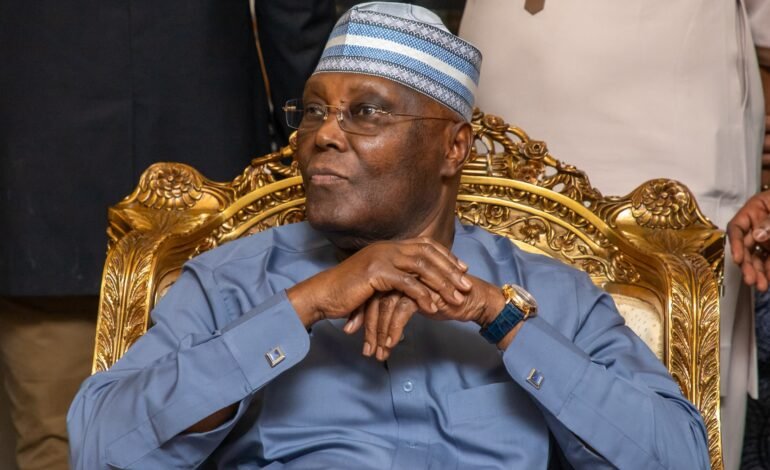

The Presidency has accused the former Vice President and the Presidential candidate of the opposition, African Democratic Congress (ADC), Alhaji Atiku Abubakar of recanting on his economic doctrine by promising to return the fuel subsidy should he get elected in 2027.
Presidential spokesman, Bayo Onanuga, in a statement responding to Atiku’s promise said the ex-Vice President and the arrowhead of the opposition challenging President Bola Tinubu’s reelection bid in 2027, was desperate and that such promise lacked fiscal sense, retrogressive and against the genuine interest of the people.
He equally dismissed the former Vice President claims that the government frittered a N30 trillion accruing from the subsidy removal alleging that such figure merely existed in Atiku’s imagination.
The Presidency said returning the fuel subsidy was not feasible because such would run against the provisions of the Petroleum Industry Act (PIA) which gave no room for fuel subsidy.
According to him, planning to return fuel.subsid would not only meet legal hurdles, but would reverse the progress made in the oil sector and drastically affect private sector investments including Dangote Refinery and other modular refineries across the country.
He said “More importantly, Nigeria’s petroleum landscape has changed significantly since May 2023. For many years, the country relied heavily on imported petrol, with the government bearing the consequences of the gap between the regulated pump price and the cost of supplying the product. Today, the emergence of substantial domestic refining capacity has fundamentally altered that equation. The Dangote Refinery has become a major source of locally refined petrol. Indeed, the Dangote Refinery would not have kickstarted production for local consumption were the subsidy regime operative. This is an important point that Atiku deceptively ignored.”
He continued “Atiku’s proposal portends a reversal of current local production, and it will spell bankruptcy for smaller local refineries like Aradel’s, causing attendant job losses and a loss of foreign exchange. Because the sector is now market-driven, Nigeria now exports refined products to Europe, Asia, and the United States, restoring national pride. This development is a sharp contrast to when Obasanjo and Atiku were in power: Nigeria’s largest import, costing about $10 billion, was refined products!. President Tinubu has flipped that to Nigeria’s advantage.
The N15 trillion that would have been borrowed and spent on selling discounted petrol has now significantly gone into the coffers of the three tiers of government. Now all states are fiscally stable and can pay salaries regularly and embark on infrastructure projects. In July, the three tiers shared about N3 trillion, a record, from the federation account. That is a major achievement, since the abolition of petrol price discount and distortions in the foreign exchange regime.
Nigeria is increasingly moving from a model in which scarce foreign exchange is used to import refined petrol to one in which crude oil, largely sold in Naira, can be processed domestically and supplied to the Nigerian market. That transition creates opportunities for greater energy security, foreign-exchange conservation, industrial development and ultimately a boost to employment generation.
The subsidy debate must therefore be grounded in the realities of today’s market rather than treated as though Nigeria’s petroleum sector has remained unchanged.”
Onanuga raised posers on how Atiku intended to return fuel subsidy and sustain it without running the nation’s economy around.
“Political promises must be backed by fiscal arithmetic. Alhaji Atiku Abubakar is entitled to propose a different economic direction. Specific answers should accompany any promise to restore fuel subsidy. “